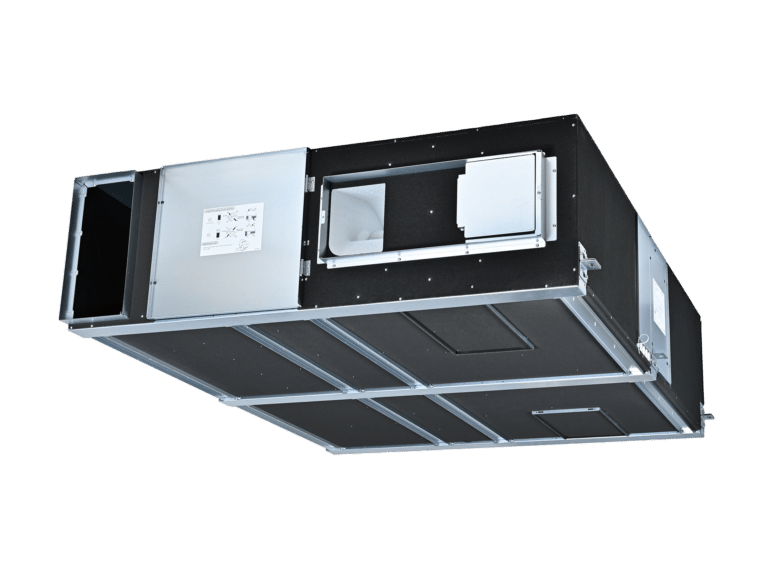
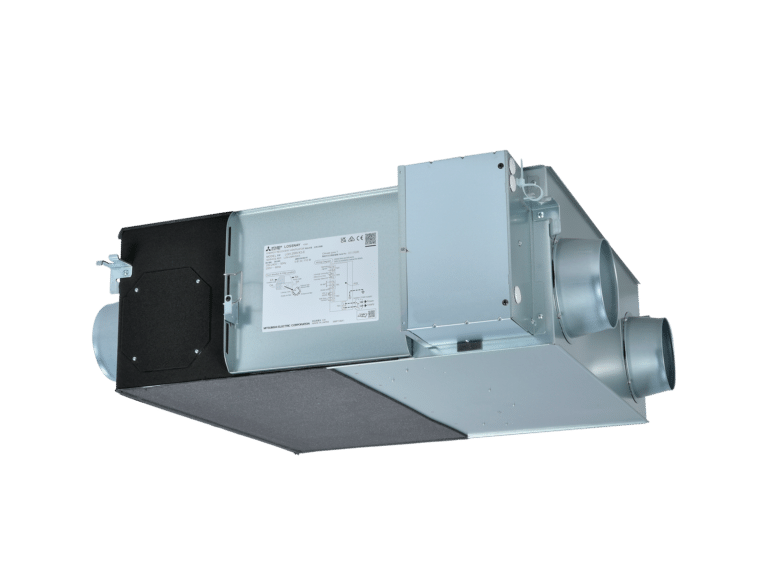
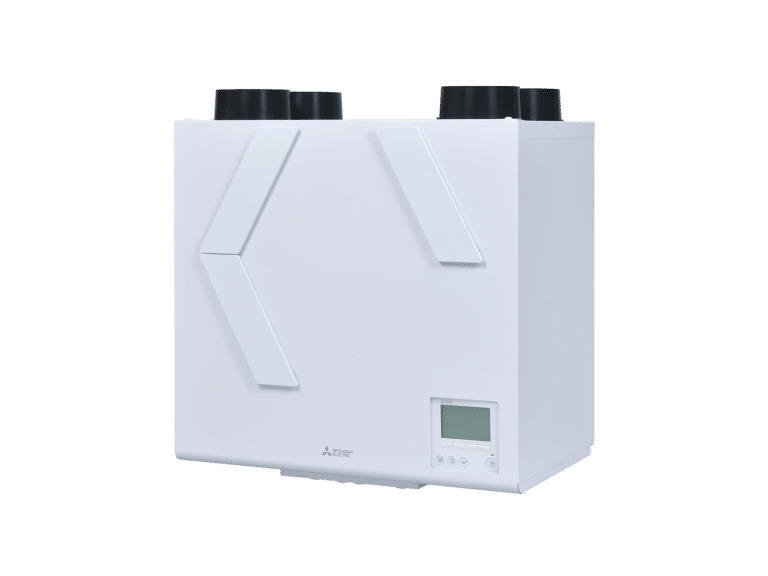
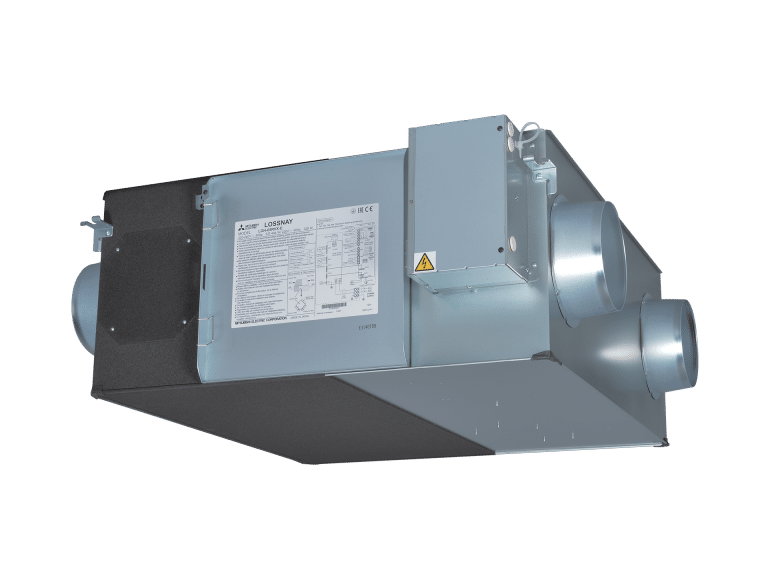
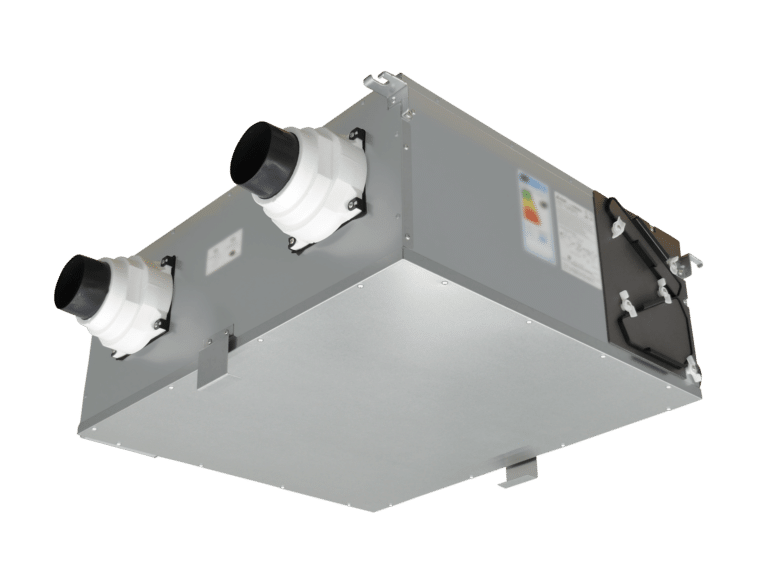
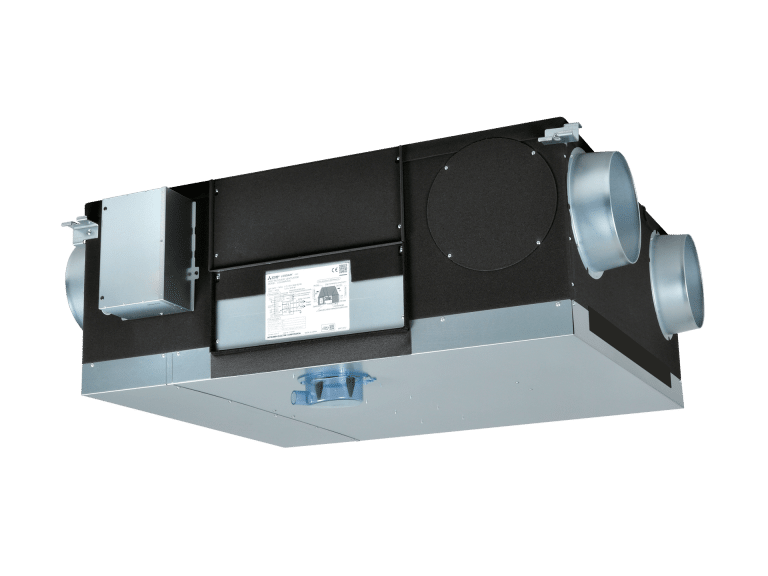
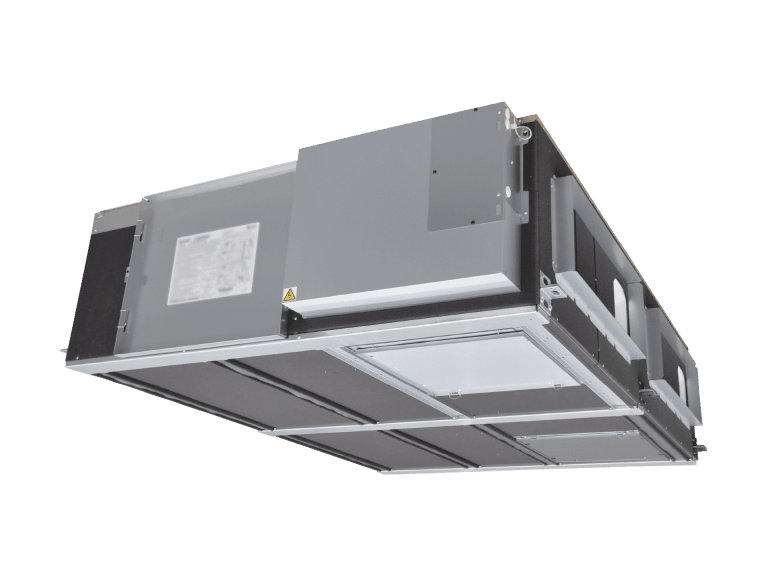
LOSSNAY VENTILATION
Mitsubishi Electric Lossnay Ventilation Systems offers superior air treatments designed to accommodate the needs of Commercial and residential spaces. By helping to resupply your building and connected areas with a continuous fresh air intake, you can remove stale indoor air and recirculate freshly filtered air collected from outdoor collection points to improve the indoor air quality and wellness of visiting clients, employees, and other stakeholders.
BENEFITS OF LOSSNAY VENTILATION SYSTEMS
Improved air quality
From bustling commercial offices to educational facilities like schools and universities, indoor air can become stagnant, leading to stuffy conditions and unpleasant odours. Lossnay ventilation provides an essential solution to continuously refresh your building’s air quality, delivering clean, invigorating air throughout the space.
With the integrated filter or optional upgradeable High Efficiency Supply Air filter*1, you can effectively remove dust, pollen, CO2, ozone, VOCs, and other contaminants. Lossnay systems are a valuable tool that actively helps maintain optimal indoor air quality for visiting clients, employees, and other stakeholders.
*1 The High Efficiency Supply Air filter is a separately available upgrade on select models. It is a non-washable filter featuring a M6 grade Classification: EN779:2012.
Enhanced air circulation and condensation control
Explore the entire range of Lossnay Ventilation Systems to discover a suite of models tailored to accommodate the needs of various settings, building and room sizes. With units that can comfortably perform at peak operational times and achieve a maximum airflow rate of up to 694 l/s, you can confidently treat your space’s air quality, no matter how large, for extra peace of mind.
By constantly drawing a fresh air intake, Mitsubishi Electric Lossnay Ventilation systems can also help remove moisture from the atmosphere that can cause damp issues and reduce the conditions to prevent mold growth.
Energy-efficient heat recovery
When exchanging stale air inside, Lossnay Ventilation units can absorb and reclaim heat, allowing you to warm fresh incoming air and create a more comfortable ambient climate without relying solely on your air conditioner. By integrating Lossnay ventilation into your air conditioning, you can enjoy a comprehensive and flexible system that adapts to your preferences and prioritises energy efficiency.
Interoperable compatibility
Mitsubishi Electric Lossnay Ventilation Systems are designed with flexibility in mind. Seamlessly integrating into various air conditioning solutions, such as the Mitsubishi Electric Mr. Slim and City Multi Series, you can take advantage of each unit’s features for a complete air treatment and conditioning experience.
What’s more, many of our systems can be installed vertically using separately available parts and adapters to ensure they can be perfectly and discreetly installed into any space. For increased usability, many models can be remotely controlled*1, allowing you to activate various functions and program up to 8 start/stop patterns over seven days to match your operations.
*1 PZ-62DR-E wired 7 day controller is required for remote operation and is available separately.
MITSUBISHI ELECTRIC: LONG-TERM AIR TREATMENT SOLUTIONS
With decades of research and development in treating and conditioning air across a diverse array of commercial and industrial applications, Mitsubishi Electric continues to be the market leader for enterprises wanting dedicated solutions.
Invest in reliability with Mitsubishi Electric Lossnay Ventilation Systems that ensure optimal air quality, superior comfort and flexible operation. If you’re looking for a tried-and-tested energy-efficient and cost-effective solution, contact us today to find your local specialist who can design a tailored system that caters to your organisation’s every want and need.
Other types of Mitsubishi Electric air treatments include:
- Commercial air conditioning: Designed to heat and cool expansive premises, our commercial solutions are equipped to comfort your customers and aid your employees and stakeholders with improved noise reduction, energy efficiency and durability.
- Air conducting fans: Help to evenly circulate air distributed by mechanical ventilation and air conditioning systems in commercial areas such as factories and warehouses
- Air curtains: Uniquely engineered to control your premises’ climate, our air curtains create firm temperature barriers, stopping cool and warm-conditioned air from dissipating and the intrusion of dust and other debris from active doors and corridors.