
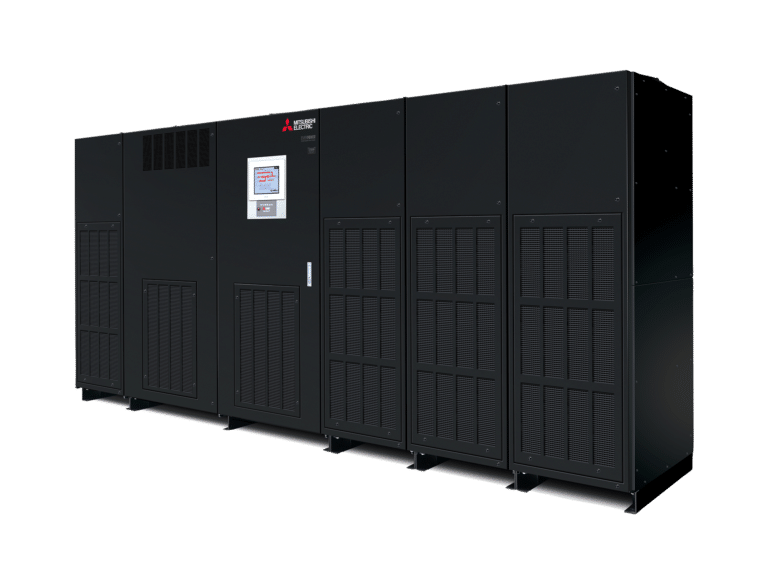
Three phase, true online UPS ranging from 120 – 1750 kVA with AC/AC efficiency up to 97% even at low loads. All units are compatible with Lithium-Ion battery technology, designed to deliver superior reliability among backup power equipment suppliers.
Need help choosing?
9900D
Mitsubishi Electric 9900D series industrial Uninterruptible Power Supply (UPS) has been designed to deliver superior reliability to satisfy the relentless demands of cloud and colocation data centres. Our 9900D has a sustained load carrying capacity of 99.9995% throughout operational history.
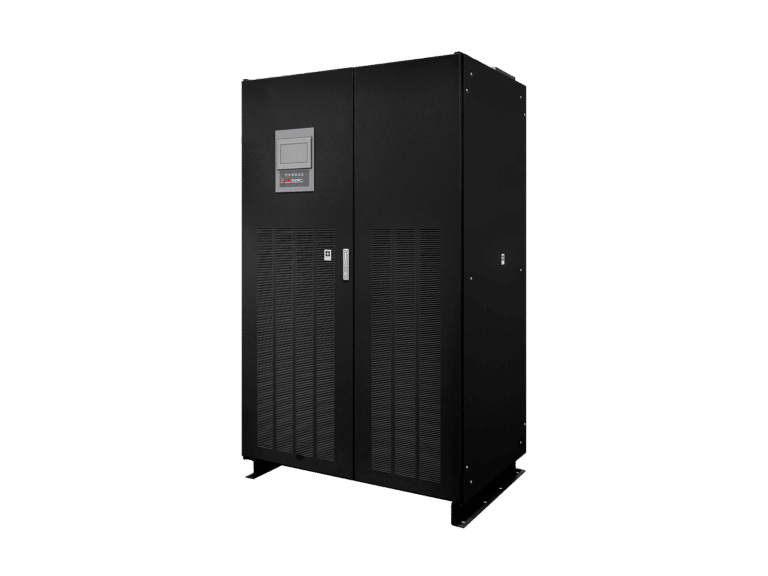
M9950
The M9950 series UPS offers a true online double conversion, high performance, high density and high-efficiency experience to users. Designed with industry leading power electronics and controls technology and incorporating innovative advanced multilevel conversion technology to create a 3-level output voltage which reduces switching loss.
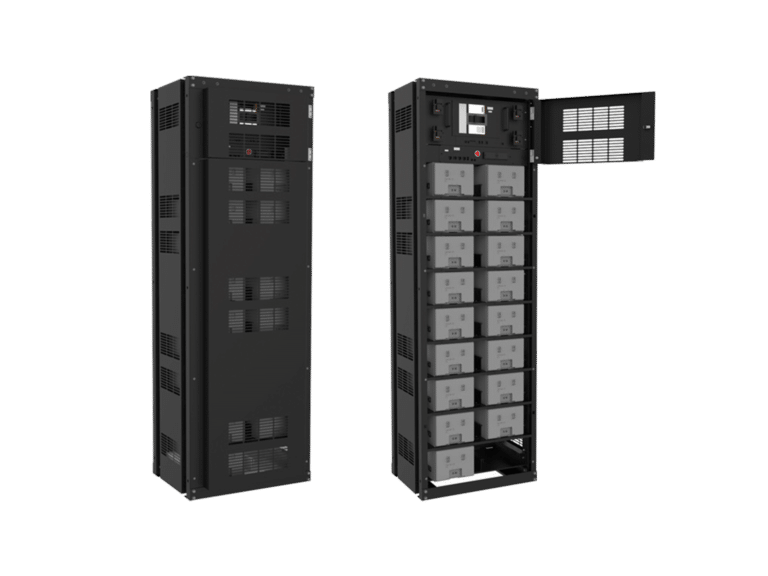
BCL04-BB
The Samsung lithium-ion battery solution, BCL04, was specifically designed to meet the demands of large-scale UPS applications. With the high current capabilities of the Lithium Manganese Oxide / Nickel Manganese Cobalt Oxide mix (LMO / NMC), this battery is capable of providing megawatts of power in just a few strings. Pair the high-power density with its 15-year design life, and it is now a leading battery solution for all high-power applications.
Mitsubishi Electric UPS systems are engineered for mission-critical operations where even momentary power loss is unacceptable. They are particularly suited for industrial manufacturing plants, data centres, healthcare facilities, transport networks, and utility control systems that require continuous, high-quality power. Their robust architecture supports both IT-based loads and heavy electrical equipment, making them a dependable foundation for complex infrastructure.
In healthcare environments, our UPS solutions protect critical IT equipment and medical systems from power failures, ensuring uninterrupted patient care. With a proven track record in facilities with critical uptime requirements, our online double-conversion UPS systems are always on, delivering filtered, clean power to equipment susceptible to power harmonics and voltage fluctuations —essential for the sensitive medical devices and electronic health record systems that modern healthcare depends upon.
The integrated BMS continuously monitors and balances each cell within the lithium-ion battery cabinet, ensuring optimal charge distribution and preventing thermal or voltage imbalances. Beyond improving safety, it delivers consistent runtime predictability and enables operators to identify battery health trends in real-time, essential for long-term asset planning and preventive maintenance.
Mitsubishi Electric UPS systems and lithium-ion battery cabinets are designed to meet or exceed key global standards, including IEC and AS/NZS requirements. They also align with energy efficiency and safety certifications relevant to Australian industrial and commercial applications, ensuring compatibility with both regulatory and corporate governance frameworks. Contact us for more information.
While Mitsubishi Electric UPS systems are designed for low-maintenance performance, scheduled inspections remain critical to ensuring long-term reliability. Routine visual checks, firmware updates, and environmental assessments help sustain system efficiency and early detection of irregularities. The modular design also allows for live component replacement in N+1 configurations—enabling servicing without system interruption.
Mitsubishi Electric UPS systems are designed with high durability and long-lasting components such as extended-life electrolytic capacitors and cooling fans that minimise maintenance requirements and reduce the total cost of ownership. By incorporating reliability into the product design from the outset, our UPS solutions help prevent unscheduled downtime and enable predictable maintenance planning. When combined with centralised monitoring systems like SCADA software, facility managers can anticipate potential issues before they occur, moving from reactive repairs to proactive maintenance strategies. This approach not only protects critical IT equipment during power outages but also contributes to streamlined operations and lower lifecycle costs across the entire data centre infrastructure. Learn more about preventive maintenance strategies for data centre equipment.