

Aged Care
Lilliane Brady Village Cobar
City Multi Hybrid VRF upgrade delivering quiet, individually controlled comfort in an operational regional aged care facility while integrating with an existing central control system.

Devonport Waterfront Hotel turns to Mitsubishi Electric City Multi Hybrid VRF for simultaneous heating and cooling. Hybrid VRF eliminates the risks of refrigerant leaks in occupied spaces.
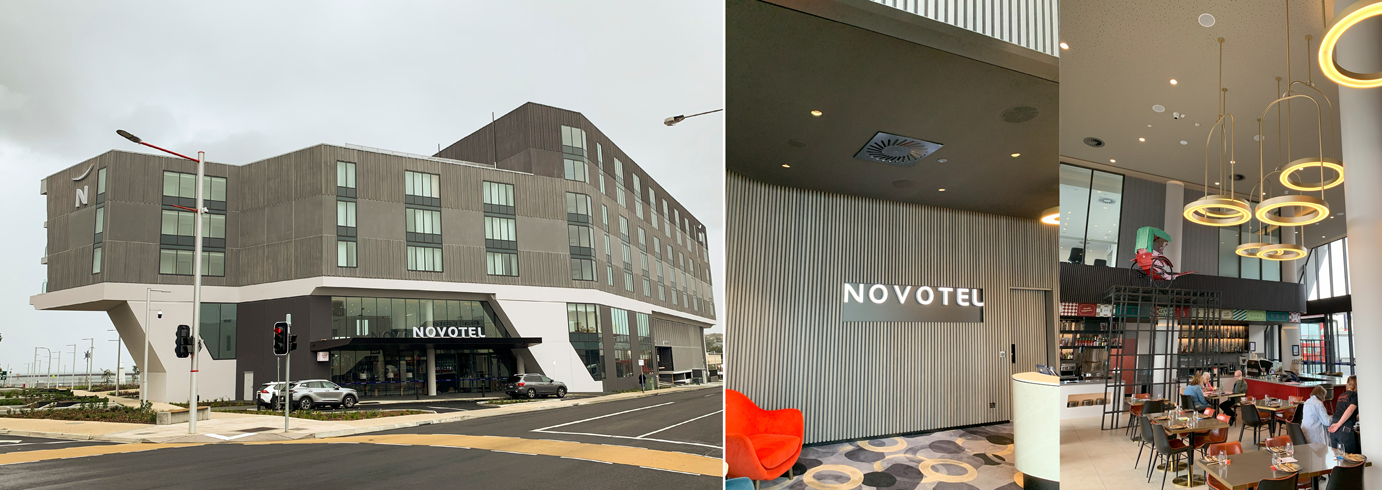
The Devonport Waterfront Hotel (Novotel) is located in the city waterfront precinct on the mouth of the Mersey River. Fragrance Group acquired the development project with proven track records with this being the third new hotel constructed in Tasmania.
The developer has been involved in several hotel projects in Tasmania including a recently completed hotel in Hobart using Hybrid VRF (HVRF). They have an understanding of the benefits of HVRF Systems, from the design and procurement stage through to the operation stage.
The hotel development called for simultaneous heating and cooling across the whole site consisting of 5 levels of accommodation rooms with a total of 187 rooms, and ground and mezzanine floors consisting of a restaurant, reception, gym and back-of-house offices. Individual room or zone temperature control was required.
The complete system would need to be connected to the Building Management System (BMS).
The developer looked for short-term and long-term cost savings in energy consumption & maintenance.
The development was to be a 4.5 star hotel with a high level of comfort and reliability in mind.

Mitsubishi Electric along with the mechanical contractor, Degree C, put forward an option to supply and install HVRF systems, which has been proven to be a cost effective solution without compromising comfort and quality. HVRF was also installed at the previous hotel developed by Fragrance Group in Hobart.
The new generation of HVRF in this project uses R32 refrigerant, which has lower Global Warming Potential (GWP) compared to the traditional R410A refrigerant which was used at the Hobart site. R32 works at a higher pressure which means that for a HVRF system with equivalent capacity, it contains less refrigerant compared to HVRF with R410A. With the next stage HFC refrigerant phase-down taking place in the next couple of years, it is expected that there will be an increase in the price of R410A refrigerant. This is one of the cost advantages of using R32 refrigerant.
The HVRF system uses water as a heat transfer medium between the Hydro Branch Controller (HBC) and the indoor units. This eliminates the risks of refrigerant leaks in occupied space in order to comply with AS/NZS5149. This is one of the aspects that were considered by the developer and design team which is to avoid installing refrigerant leak detection system in occupied space. This could potentially save a few thousands of capital outlay, even before considering additional regular maintenance requirements.
The HBC houses pumps, heat exchangers and control valves. Each HBC requires an expansion valve and cold water connection. There is no need for third party control valves, balancing valves, etc. which simplifies the installation process on site and reduces the commissioning time required. Mitsubishi Electric commissioning team worked closely with Degree C to ensure the commissioning procedures were followed and any issues raised on site could be rectified in a timely manner. This approach ensures the air purging process is thoroughly carried out so that the system can operate effectively.
AE-200E and EW-50E centralised controllers were installed to control and monitor all HVRF units, and to provide high-level interface to the BMS using BACnet protocol. The building manager monitors and controls each indoor unit from the BMS front-end computer. Fault alarms can be generated and sent to the computer for further action by the building manager.
The central controller has a temperature setback function which is used in this hotel to maintain the room temperature within an acceptable limit (elevated setpoint) when not occupied. This helps reduce the running cost for the hotel operator and also to minimise the time required to bring the room up to a comfortable temperature when the guest arrives.
Hotel guests control the air conditioning unit from the respective wall controller. To save energy, the air conditioning unit operation is interlocked with the room energy control terminal incorporating a key card switch.
The HVRF system provides simultaneous heating and cooling for each air conditioning unit which allows the guest to choose the mode of operation (heating/cooling) from the wall controller with no restrictions. When there is a simultaneous demand for heating and cooling, the system recovers the heat from units that operate in cooling mode and puts it back into the rooms that require heating. This will maximise the efficiency of the system and therefore help reduce its running cost.
The outdoor units supplied for this project are the “-BS” variant with factory applied additional corrosion protection which will help prolong its expected service life especially where the hotel is located in the river mouth, exposed to coastal wind.

Heat Recovery
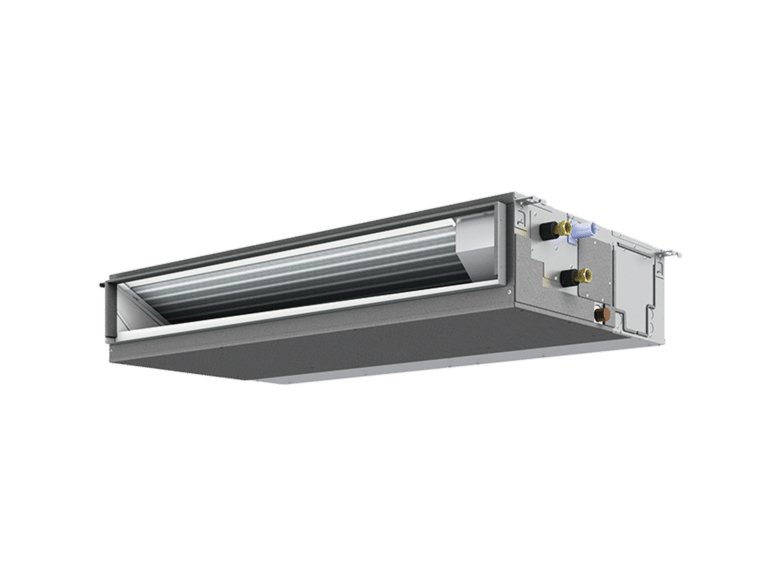
HVRF Indoor Units
City Multi Hybrid VRF
Centralised Air Conditioning Controllers
Aged Care
City Multi Hybrid VRF upgrade delivering quiet, individually controlled comfort in an operational regional aged care facility while integrating with an existing central control system.
Apartment
Mitsubishi Electric City Multi water cooled heat recovery VRF provides 3.0 MW of integrated heating, cooling and ventilation for high-density mixed-use Queensbridge Building in Southbank.
Office
Mitsubishi Electric City Multi 2-pipe Heat Recovery VRF delivers simultaneous heating and cooling with centralised control for the St Kilda Road Towers HVAC upgrade.