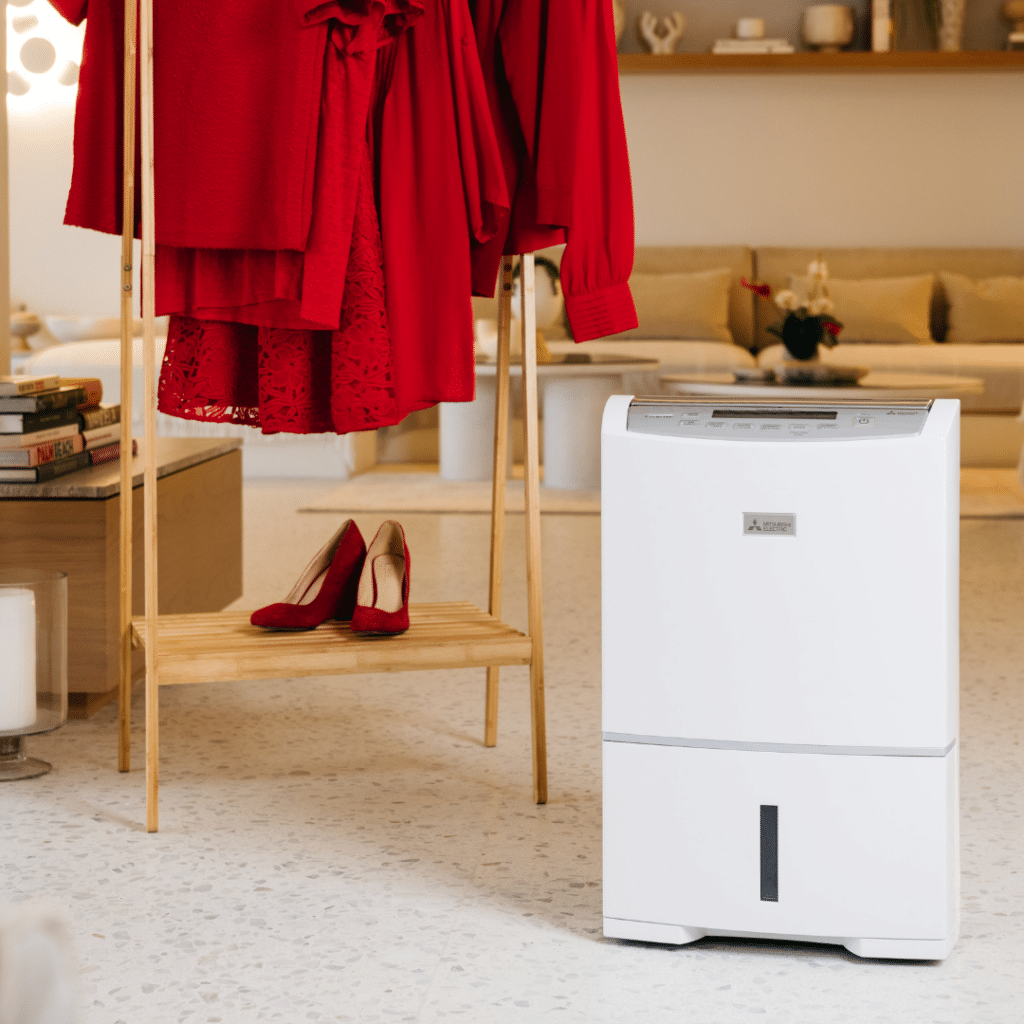
What is a dehumidifier?
A dehumidifier is an appliance designed to reduce and maintain the level of humidity in the air. Extracting excess moisture helps create a more comfortable and healthier indoor environment.
What does a dehumidifier do?
Many homeowners ask what a dehumidifier does beyond simply drying the air. The answer lies in its ability to control dampness, prevent condensation on windows, and reduce the risk of mould growth in humid conditions. For those in Australia’s tropical and coastal regions, a dehumidifier for mould prevention can be particularly valuable, as the persistent moisture can otherwise contribute to mildew and even damage furnishings.
How does a dehumidifier work?
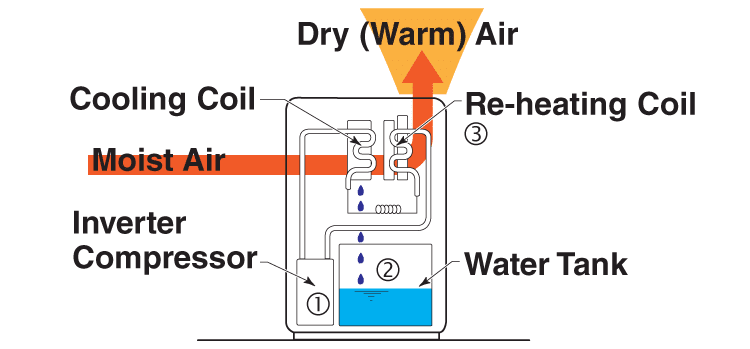
The process is quite straightforward for those wondering, “How does a dehumidifier work?” The appliance draws in humid air and passes it over cooled coils, where the moisture condenses into water droplets. This is essentially a form of the refrigeration cycle. The collected water is stored in a removable tank or drained through a hose, while the dehumidified air is reheated slightly and released back into the room.
By continuously cycling air through this process, a dehumidifier steadily lowers indoor humidity preset levels. This targeted approach is different from an air conditioner’s incidental moisture removal, making it more efficient in climates or seasons where dampness persists even without high heat.
Do I need a dehumidifier or an air conditioner?
Dehumidifiers can have many benefits around the home, especially if you live in areas of high humidity or, like much of Australia currently, high rainfall is causing moisture build-up within the home. But if you own an air conditioner, it can be as effective at dehumidifying a room as a dehumidifier. Why would you need a dehumidifier? We have asked the Mitsubishi Electric Technical Team for their advice.
Cooling Mode
We often get asked, “Will an AC dehumidify?” And yes, air conditioners can achieve a small amount of dehumidification while operating in cooling mode. They will remove moisture from the room where the room temperature is more than 2°C above the cooling mode set point. That is, if you have set your air conditioner to run at 23°C, the room temperature will need to be at least 25°C when you first turn it on. If the difference is below 2°C, the compressor will back off and not remove moisture. Or, technically speaking, the air conditioner’s coil needs to be below the dew point in the air to remove moisture.
When an inverter air conditioner cools the room to the set temperature and the compressor backs off (and in some cases the indoor fan), it is no longer effective at moisture removal.
Heating Mode
When an air conditioner is operating in heating mode, the unit does not provide dehumidification. The air conditioner coil needs to be below the dew point to remove moisture, and this does not occur during heating mode.
Aircon vs dehumidifier
An air conditioner is designed to provide comfortable conditions indoors. Some dehumidification is achievable in cooling mode in some temperature/humidity ranges, but this is by the principle of refrigeration rather than design.
Air conditioners generally do not have published moisture removal rates in their specifications, as they are not designed to be dehumidifiers. There are too many variables to account for, which can affect dehumidification.
A dehumidifier, on the other hand, is designed specifically to remove moisture from the air all year round. Dehumidifiers have a specified dehumidification rate or absorbed humidity rate, generally measured in litres over 24 hours for a given temperature and humidity.
If you require dehumidification in all weather conditions year-round, a dehumidifier could be the more appropriate choice. As an added benefit for those wet days, the Mitsubishi Electric MJ-EV38HR-A has an intelligent laundry mode, handy for reducing drying times when you don’t want to use the dryer or quickly drying delicate fabrics.
For more information on the Mitsubishi Electric EV38HR Dehumidifier and its features, go to our dehumidifier page.
Dehumidifier vs Air Conditioner: A quick comparison
To make the differences clearer, we put together a quick dehumidifier vs air conditioner comparison of main features for you to reference:
| Feature | Air Conditioner | Dehumidifier |
|---|---|---|
| Dehumidification Capacity | Capacity
Limited, incidental moisture removal during active cooling only |
Designed for moisture removal, with published capacity (e.g., 38 litres/day* for MJ-EV38HR-A) (*Room Temperature 30°C / Relative Humidity 80%) |
| Energy Use | Moderate to high, depending on cooling/heating demand | Lower than running air conditioning, especially in mild weather |
| Maintenance | Requires filter cleaning and seasonal servicing | Requires tank emptying or drainage setup, plus filter cleaning |
| Purpose | Comfort cooling and heating | Targeted humidity control year-round |
When to use both a dehumidifier and an air conditioner
- Use an air conditioner if: the main concern is cooling in summer, with incidental humidity control as a secondary benefit. This is suitable in areas where humidity is occasional rather than constant.
- Use a dehumidifier if: the climate is consistently humid, during rainy seasons, when condensation and mould risk is high, or when you frequently need to dry clothes indoors. In Australia, this applies particularly to coastal cities like Brisbane, Cairns, and Sydney, where a dedicated dehumidifier for mould prevention and laundry drying offers year-round benefits.
- Use both together if: you want cooling in summer but also targeted humidity reduction for health, comfort, protection of valuables and efficient indoor clothes drying. This combination ensures your indoor environment remains both cool and dry regardless of seasonal changes.
When should you not use a dehumidifier?
There are certain situations where using a dehumidifier may not be necessary or even advisable. In very dry conditions or during winter in cooler climates, where room humidity levels are low. Running a dehumidifier in these circumstances may make the air too dry, leading to discomfort such as dry skin or irritation. If the humidity level is too low, the dehumidifier may not operate.
You should also avoid using a dehumidifier when windows or exterior doors are open, as it will struggle to maintain a consistent humidity level. Additionally, if a room is unheated or extremely cold, condensation can freeze on the unit’s coils, reducing performance. In such cases, it’s best to set the dehumidifier to AUTO or wait until temperatures rise before operating it again.
Benefits of using a dehumidifier
Are dehumidifiers worth it? There are several reasons why using a dehumidifier can be beneficial in certain instances. Let’s take a closer look at some of them.
Mould prevention
High humidity encourages mould and mildew growth, which can damage walls, furniture, and clothing. A dehumidifier for mould prevention, such as the MJ-EV38HR-A, helps keep indoor spaces dry enough to stop spores from thriving. This is especially relevant for Australian households during wet summers or prolonged rainy periods.
Air quality
Excess humidity contributes to musty odours and can aggravate allergies. Dehumidifiers improve overall air quality by reducing airborne moisture. Models with PM2.5 filters, like Mitsubishi Electric’s units, also capture dust and fine particles, supporting a healthier living environment.
Indoor laundry drying
Another significant advantage of dehumidifiers over air conditioning is their ability to dry clothes indoors effectively. Unlike air conditioners, which only provide minimal dehumidification when cooling and none during heating mode, dehumidifiers offer a dedicated solution for indoor laundry drying. This is particularly valuable during wet weather, poor air quality days, or winter months when outdoor drying isn’t practical. Premium models with Intelligent Laundry Mode automatically adjust airflow and monitor humidity levels, stopping when clothes are dry to prevent over-drying. This gentle drying method is ideal for delicate fabrics that shouldn’t go in a tumble dryer, while also using significantly less energy than traditional dryers.
Energy efficiency
Dry air is easier to heat and cool than moist air. By reducing humidity levels, a dehumidifier can make air conditioners and heaters operate more efficiently, potentially lowering energy bills.
Protecting your belongings
Many household items are sensitive to moisture, from wooden furniture and flooring to electronics, clothing, books and musical instruments. A dehumidifier helps preserve these belongings by maintaining stable humidity levels and preventing long-term damage.
Which is the best dehumidifier?
The best dehumidifier balances capacity, features, and efficiency. The Mitsubishi Electric MJ-EV38HR-A delivers on all fronts, removing up to 38 litres of moisture per day* while offering intelligent laundry mode, PM2.5 air purification, and multi-directional airflow. The CHOICE Recommended model is designed for Australian conditions, and it helps prevent mould, improve air quality, and protect belongings year-round.
If you’re debating whether to buy a dehumidifier instead of an air conditioner or purchase an addition to your existing system, this model provides targeted humidity control to complement your existing cooling and heating, making it a practical choice for comfort and protection.
* Room Temperature 30°C / Relative Humidity 80%