Air quality is important as we all like to ensure a healthy home environment for our family. Mould, bacteria, and allergens all affect our health in many ways, so it’s important to try and control the levels within your home environment. Two popular products on the market designed to assist with air quality are air purifiers and dehumidifiers, but what do they do exactly? What is the difference between them, and do you need both in your home?
What is the difference between an air purifier and a dehumidifier?
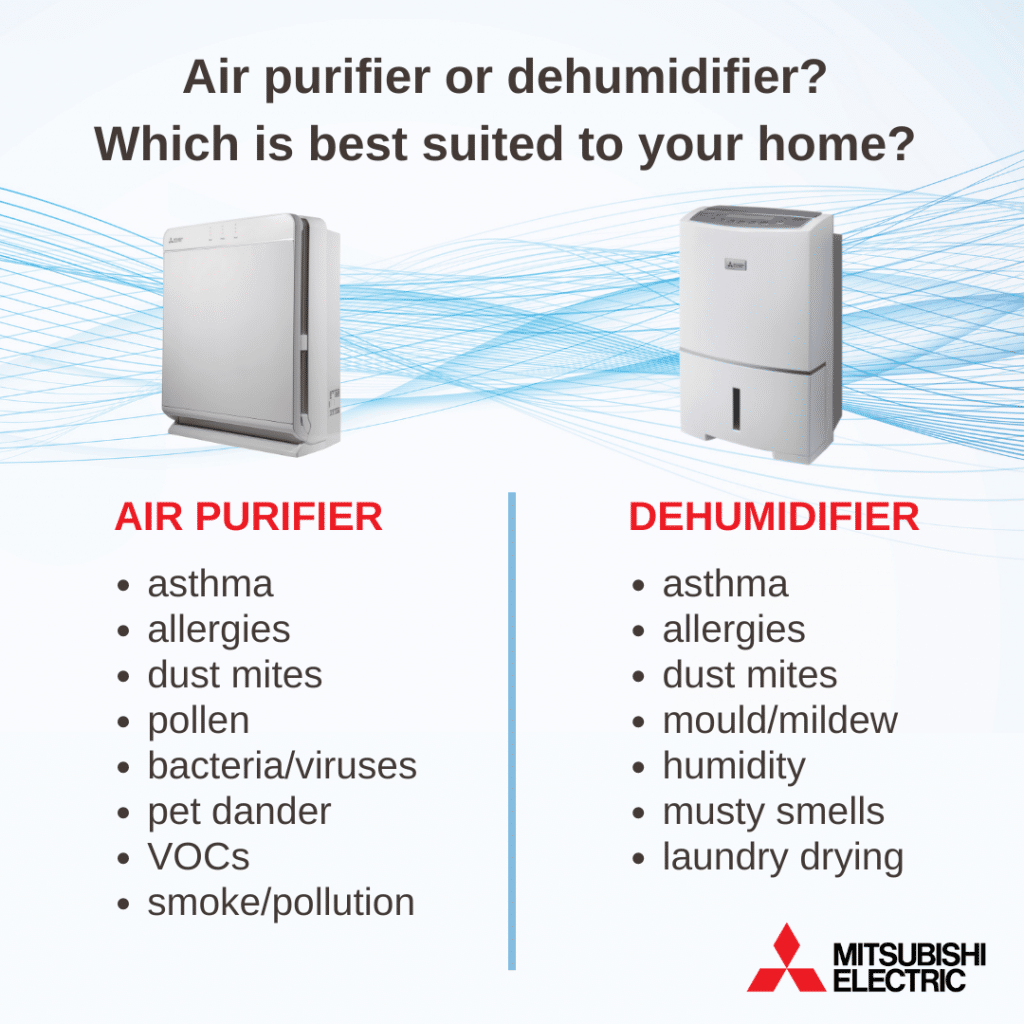
A Dehumidifier is designed to remove excess moisture from the air and maintain a comfortable level of humidity level in your home. It can also help to remove musty odours and assist with preventing the formation of mould and mildew. In comparison, an Air Purifier helps to clean the air in a room and improve indoor air quality by reducing common airborne allergens and pollutants.
What does an air purifier do?
External pollutants such as pollen, dust, smoke, and other allergens enter the home any time you open your windows and doors. Other sources of pollution are already inside the house, like household dust, cigarette smoke, volatile organic compounds (VOCs) emitted from paint and the foam inside sofas and mattresses, pet hair and dander. It can be surprising how polluted indoor air can be. These pollutants have less chance to simply blow away and can build up over time and cause irritation to your breathing, eyes, and skin, especially if you are an allergy or asthma sufferer.
An air purifier works by sending the air in your room through a series of filters. The number and types of filters vary from brand to brand, with most available on the market offering a three-layer filtration system.
The main reasons to own an air purifier:
- To help with asthma and allergies, particularly to dust and pollen
- To help keep the air clear of bacteria and viruses if you have sick people at home
- If you own pets, to reduce the amount of pet hair and dander
- To assist in the reduction of the amount of volatile organic compounds (VOCs) within the home
- If you smoke inside your home
- If your neighbourhood has particular pollution problems, such as being near a major road or in an area affected by bushfires or hazard reductions
What does a dehumidifier do?
Dehumidifiers are beneficial in high humidity environments. Not only do they make your home a more comfortable place to be, but they also reduce the risk of mould and mildew forming and the likelihood of dust mites and other pests. An added benefit of a dehumidifier is the laundry feature, handy for reducing drying times on those wet days when you don’t want to use the dryer or for drying delicate fabrics quickly.
A dehumidifier works by pulling moisture-filled air into the unit, passing it over a cooling coil. The moist air condenses into water droplets which are collected in the water tank. The dehumidified air is then blown across a re-heating coil and out the dehumidifier, resulting in drier air. The humidity in the room is reduced by repeating these steps.
The main reasons to own a dehumidifier:
- To reduce mould and mildew growth in your home
- Your home has a musty smell
- You live in an area of high humidity
- To assist with allergy & asthma relief
- Inhibit dust mites
- Reduce indoor laundry drying times
Do you need both an air purifier and dehumidifier?
To decide which appliance is right for you depends on the needs and environment of your home. Both an air purifier and dehumidifier have beneficial features for the health of your home and family. If your primary concern is a high level of filtration for allergies and asthma, or reducing pollutants such as VOCs, exhaust fumes and bushfire smoke, a dedicated air purifier with advanced filtration technology may be more suitable.
However, if you want to help prevent moisture build-up and mould growth within your home, the Mitsubishi Electric MJ-EV38HR-A Dehumidifier is specifically designed for this purpose. The good news is that this unit offers advantages of both, with its primary function removing excess moisture from the air—up to 38 litres per day—while also featuring an Air Purification Mode equipped with a pre-filter and two-layer PM2.5 filter system to remove common fine particles and dust. An added practical benefit is its dedicated Intelligent Laundry Mode, which helps you dry delicate clothes and shoes indoors by monitoring humidity levels and airflow, then automatically stopping once drying is complete.
So if your home is battling both high humidity levels and poor air quality, this single unit can help address both concerns, particularly in rooms prone to moisture buildup such as basements, laundries, and bathrooms, where mould and allergens often thrive together.
If you need more information on either of these products, visit the Mitsubishi Electric Air Treatment page.