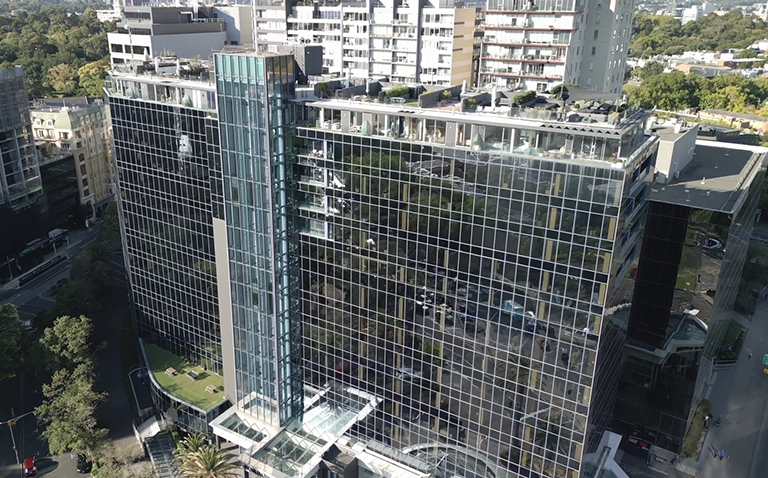
Aged Care
Lilliane Brady Village Cobar
City Multi Hybrid VRF upgrade delivering quiet, individually controlled comfort in an operational regional aged care facility while integrating with an existing central control system.

Mitsubishi Electric City Multi Hybrid VRF enables staged delivery and heat recovery comfort for The Yarra build-to-rent development.
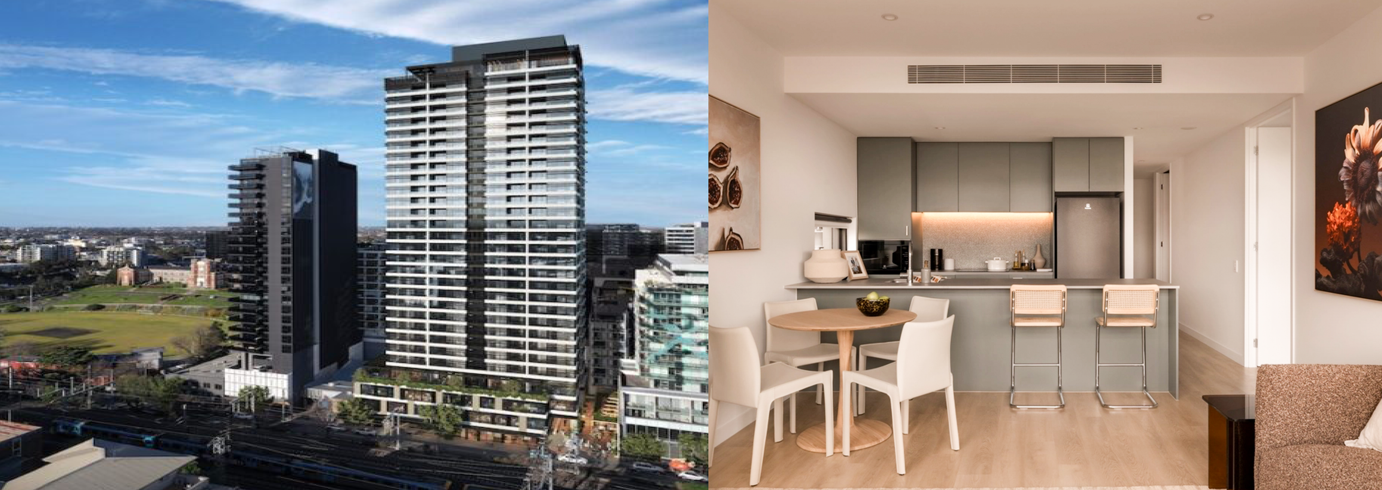
The Yarra is a premium build-to-rent residential development delivered by Greystar in the heart of South Yarra, one of Melbourne’s most established inner-city precincts. Situated adjacent to South Yarra Station and Chapel Street, the project forms part of Greystar’s strategic expansion into Australia’s institutional rental housing market. The development was designed to provide long-term rental accommodation supported by professionally managed services and shared resident amenities, positioning it as a high-quality alternative to traditional private rental apartments.
Comprising studio, one- to three-bedroom residences, The Yarra integrates communal spaces, including resident lounges, co-working areas, wellness facilities and rooftop amenities, to support modern urban living. As Greystar’s second build-to-rent project in inner Melbourne’s south-east corridor, the development reflects growing demand for amenity-rich, energy-conscious residential buildings in high-density locations. Its scale, location and premium positioning make it a strong candidate for a sophisticated, centralised air-conditioning solution that meets multi-residential performance requirements and supports long-term operational efficiency.
The original tender design specified a water-cooled VRF system serving two apartment towers, with the central plant, including cooling towers and heat pumps, located on the roof of the higher Yarra tower. Due to acoustic constraints, the central plant was not permitted on the lower Claremont tower roof.
As a result, condenser water (CCW) risers were designed to run from the Yarra tower roof down to the basement carpark, then horizontally across to the Claremont tower, and finally rise again to serve the apartments.
While technically viable, this configuration created a significant staging conflict. The construction program required the smaller Claremont tower to be completed and handed over first, yet the central plant serving both buildings was located on the higher Yarra tower, scheduled for completion in Stage 4. Delivering conditioned apartments without the primary plant installed was impractical, prompting a reconsideration of the system strategy.
An alternative investigation into air-cooled VRF with a separate plant for each tower addressed the staging challenge but introduced another critical limitation: compliance with refrigerant concentration requirements. Given the building height, apartment layouts and pipework lengths, the design could not consistently meet allowable refrigerant concentration limits in occupied spaces.
The solution needed to resolve staging constraints, maintain acoustic compliance, and meet refrigerant safety requirements in a dense, multi-residential environment. A hybrid VRF approach ultimately provided a pathway to overcome both the construction sequencing issue and refrigerant concentration limitations while maintaining performance expectations across the development.

A City Multi Hybrid VRF solution was adopted to replace the original water-cooled VRF design, delivering construction flexibility. By utilising separate air-cooled condensers serving each floor, each tower could operate independently. This resolved the staging constraint, allowing the Claremont tower to be completed and commissioned without reliance on the plant located on the yet-to-be-finished Yarra tower roof.
Hybrid VRF technology uses refrigerant only between the outdoor unit and the Hydro Branch Controller, with water circulated to the indoor fan coil units beyond that point. By switching to water within occupied apartment zones, the design effectively resolved concerns about refrigerant concentration limits while maintaining the comfort and zoning performance expected in a premium build-to-rent development.
Comprehensive energy modelling demonstrated performance equal to or better than the original tendered water-cooled VRF scheme. The modelling confirmed that the revised approach met project energy targets while simplifying infrastructure. Compared with a traditional cooling tower system, the Hybrid VRF strategy reduced maintenance requirements, removed the need for condenser water treatment, eliminated legionella management risk, and reduced associated electrical infrastructure.
To address rooftop acoustic constraints at the Claremont tower, acoustic attenuation kits sourced from the UK were installed alongside night setback operating modes. This ensured compliance with local acoustic requirements with minimal impact on system capacity or apartment comfort.
The final configuration comprised of Hybrid R32 Heat Recovery VRF serving the apartments and both R32 and R410A Heat Recovery VRF systems for the common areas.
This integrated approach delivered the same user-based comfort outcome in each apartment while providing measurable operational, compliance and staging advantages to the developer.
Hybrid VRF enabled a practical, timely delivery for both towers, supporting staged completion without compromising the design. The Claremont building was commissioned independently, allowing the development program to proceed as planned while maintaining consistent performance across apartments and shared spaces.
For the asset owner, the revised approach reduced operational complexity compared with the original central plant concept. Removing cooling towers and condenser water systems simplified maintenance planning, reduced plantroom infrastructure and eliminated water management obligations, lowering the building’s long-term risk profile.
Residents experience the same level of thermal comfort expected in a premium build-to-rent development, with responsive heat recovery operation and individual control in each apartment. The completed system meets acoustic, safety and energy performance requirements while providing a streamlined mechanical solution suited to high-density residential living.

City Multi Hybrid VRF
Heat Recovery
City Multi Hybrid VRF
Centralised Air Conditioning Controllers
Air Conditioning Wall Controllers
Aged Care
City Multi Hybrid VRF upgrade delivering quiet, individually controlled comfort in an operational regional aged care facility while integrating with an existing central control system.
Apartment
Mitsubishi Electric City Multi water cooled heat recovery VRF provides 3.0 MW of integrated heating, cooling and ventilation for high-density mixed-use Queensbridge Building in Southbank.
Office
Mitsubishi Electric City Multi 2-pipe Heat Recovery VRF delivers simultaneous heating and cooling with centralised control for the St Kilda Road Towers HVAC upgrade.